

Seng Bu & Maaike Matelski examine the Myanmar diaspora’s ‘long-distance activism’ in the Netherlands.
In February 2021, Myanmar’s latest military coup sparked a nationwide resistance movement known as the Spring Revolution. In its wake, thousands fled the country, including to the Netherlands, where an estimated 2,000 migrants from Myanmar now reside.
Far from home, these diaspora members feel a deep sense of responsibility to support people in Myanmar, engaging in a range of community-driven activities. It is within this context of political upheaval and diaspora activism that our research, conducted between April 2022 and September 2023, examined how this small but diverse community navigates generational and ethnic differences to keep their revolution alive. Here, we share insights from that study, which are also detailed in “Myanmar Diaspora’s Long-Distance Activism in the Netherlands after the 2021 Military Coup,” published in Ethnopolitics (2025).
In our research, we introduce the concept of “long-distance activism” to describe the ways in which the Myanmar diaspora in the Netherlands continues its struggle from afar.
We then examine how this activism interacts with inter-generational and inter-ethnic dynamics within the diaspora. Our study draws on participatory observation and interviews with 20 Myanmar-born individuals, aged 25–62, representing eight different ethnic groups. Following Horst (2008), we define diasporic transnational engagement as involving both direct strategies (for example, providing economic or political support to counterparts in the homeland) and indirect strategies (for example, lobbying the international community). Unlike the usual focus in diaspora studies on migrants’ nationalist activities or contributions to armed conflict, we emphasise social and fundraising activities that emerged from feelings of care and responsibility among the Myanmar diaspora in the aftermath of the 2021 military coup.
Although resistance to the military has increasingly become armed and is presumably funded partly by Myanmar diasporic communities internationally, this was not the focus of our research. Instead, we analyse how the Myanmar diaspora perceive a sense of duty to support those who remain back home by organising activities such as fundraising, protests, social gatherings, and digital activism. They also seek to inform the international community about the changing situation in Myanmar—particularly in the Netherlands, where Myanmar has had little visibility outside of a few specialised organisations, such as the Amsterdam-based Transnational Institute

11 Minutes To Read
JULY 20, 2020
In this context, we look at the different generations and ethnic groups within the Myanmar diaspora and the way they operate, either together or alongside one another. Building on this analytical framework of inter-generational and inter-ethnic dimensions, the earliest generation we identify as still politically active is the “88 Generation,” those who fled after the 1988 uprising. The most recent are those who fled during the “Myanmar Spring Revolution” following the 2021 military coup. Within the Myanmar diaspora, respondents identify two broad politically active groups. The first group consists of individuals who continue to follow the politics of the National League for Democracy (NLD), led by Aung San Suu Kyi, and the National Unity Government (NUG) that emerged after the 2021 coup. The second, larger group includes both younger and older generations from various ethnic backgrounds, as well as a subset of 88-generation activists. This group is more adaptable to recent changes and open to trying new strategies, in contrast to the first group. As one participant explained, they are more focused on the process of revolution itself, rather than adhering to a singular political ideology. They are open to exploring diverse paths toward achieving change through revolution, considering Myanmar’s diverse political and socio-cultural context. They are also willing to engage with diverse ethnic groups to form new allies in the revolution against the military. The changes shown by the latter group mirror developments in Myanmar, where recent generations of activists are more likely to connect across ethnicity and other societal divisions since the 2021 coup.
Collaborations between generations remain complex, primarily due to their different preferred strategies for activism. One 32-year-old participant noted that it was still difficult for the NUG to effectively engage with youth under the age of 35. Another such ‘youth’ respondent commented that “in Myanmar culture, young people are asked to follow what adults say […] The adults kept a string on us like the military government.” He added that the older generation did not appear open to suggestions and would often stay away from events if they felt other participants did not share their perspective. This was especially the case for activists from the older generation who were trying to hold on to the prominent leadership roles they had assumed during their exile since the 1990s.
Meanwhile, young people who grew up in the Netherlands are trying to overcome the traditional power hierarchy in Myanmar culture, embodied through age, that they feel is still present within the diaspora. One participant commented that she could only respond to older members within the Myanmar community if she first warned them that she would “talk like a Dutch.” The younger generation also suggests that Myanmar diaspora activities must actively engage with the host society to contribute to the revolution in Myanmar as much as possible. One participant described his views on the fundraising events being organised as religious or family events, which he considered ineffective. He gave an example of one event organised during the summer of 2023 as “less professional […] like a picnic basically…it was nice but really disorganised, I’m relativising it according to a western, modern standard.” He considered this way of organising events not conducive to influencing Dutch policies on Myanmar: “When you try to combine activism into a social event it is a little harder to reach the goal that you want,” he explained. “If you get money only from the community, you know how much you can get. If you can make it more attractive to the Dutch people or others, you can reach your goal sooner.”
The opening of Myanmar’s internet sector over the past decade has significantly increased Myanmar diaspora’ virtual connectivity with the homeland. Simultaneously, participants felt a duty to keep their social media followers informed about tragic developments in Myanmar, “whether they read [their posts] or not.” However, the rise in online surveillance since the latest coup has also introduced new security concerns, particularly for friends and family members who remain behind. Consequently, some participants have chosen a “strategic absence” from social media to bypass the military’s digital radar.
Long-distance activism within the Myanmar diaspora is often shaped by multiple, sometimes competing visions of what ‘homeland’ and ‘support for the homeland’ truly mean. Moreover, the Myanmar diaspora dynamics in the Netherlands reflect the changes in social dynamics, perceptions, and relationships among different ethnic groups in Myanmar. For example, a Bamar-Muslim participant expressed unease with Myanmar activists who would still use banners like “We stand with Aung San Suu Kyi.” In her view, holding such a banner in front of the International Court of Justice (ICJ) in The Hague is inappropriate, especially since Aung San Suu Kyi defended the government against the accusation of genocide towards the Rohingya at the ICJ in 2019. She said: “This is wrong. I told them to change the banner, but they did not accept it.” Participants also expressed criticism of both the military and the former NLD government for their marginalisation of ethnic nationalities such as Karen, Kachin, Rohingya and Rakhine. As one Rohingya participant noted, they were regarded as “second class citizens…for her [Aung San Suu Kyi’s] father’s country to remain as it is”. In parallel, since the Rohingya crisis, many international actors, according to respondents, have tended to view everyone in Myanmar as either a ‘hero’ or a ‘villain’, which was perceived as counterproductive to the goal of peacebuilding.
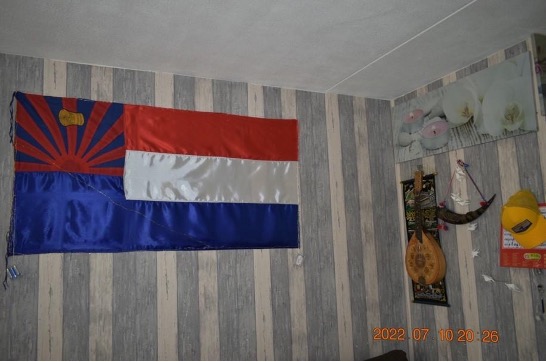
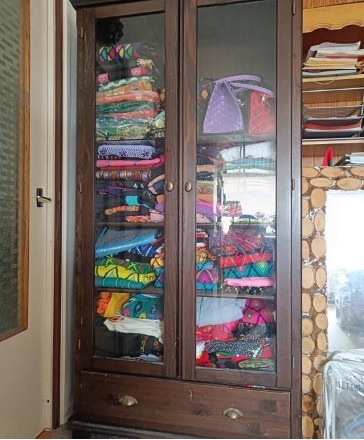
The various ethnic groups within the Myanmar diaspora in the Netherlands imagine their homeland in different ways. When visiting their homes, one could clearly see ethnic flags and cultural symbols adorning the living spaces (see photographs 1 & 2). Even participants who had fled after the 1988 uprising continued to identify as Karen or Kachin, rather than as Burmese, or as Dutch.
Our overall conclusion is that the 2021 military coup and the Myanmar Spring Revolution that followed have emancipated inter-ethnic and inter-generational relations not only in Myanmar but also within the Netherlands-based Myanmar diaspora. Nevertheless, some factors inhibit the potential unity within the Myanmar diaspora. These include security concerns, persistent distrust, the political bourgeoisie behaviour of some 88 generation activists, and differing generational views on the best ways to advocate for the Myanmar people—especially since the coup.
Our research suggests the importance of sensitivity to context and temporality when analysing diaspora communities from a particular country that do not necessarily form a coherent whole, or even strive towards the same goals for their country of origin. We propose long-distance activism as a concept that adequately captures the nuances of diaspora engagement with conflict back home, one that allows for the complexities of ethnicity, generational dynamics, and temporality to be examined. What binds diaspora communities together, especially in the post-coup environment, is an urgency to share and care about Myanmar’s crisis and revolutionary movements with the outside world, in whatever shape or form.
Seng Bu is a doctoral researcher at the Tampere Peace Research Institute, Tampere University, Finland, focusing on peace and conflict studies.
Maaike Matelski is an Assistant Professor at the Department of Social and Cultural Anthropology, Vrije Universiteit Amsterdam, the Netherlands. She is the author of the book Contested Civil Society in Myanmar: Local Change and Global Recognition (Bristol University Press, 2024).
Like This Article