

Reva (pseudonym) shares stories of silent struggles from the Irrawaddy’s agrarian communities.
“Ko-Htu-Ko-Hta… Ko-Htu-Ko-Hta…” (ကိုယ်ထူကိုယ်ထ) is a Burmese phrase I have heard throughout my life. It is commonly invoked to describe a struggle that must be enacted by oneself, not as a moral choice, but as a necessity. The phrase is often used to name self-directed collective struggles arising from external pressures that affect the entire community, particularly those linked to the climate crisis and ecological distress.
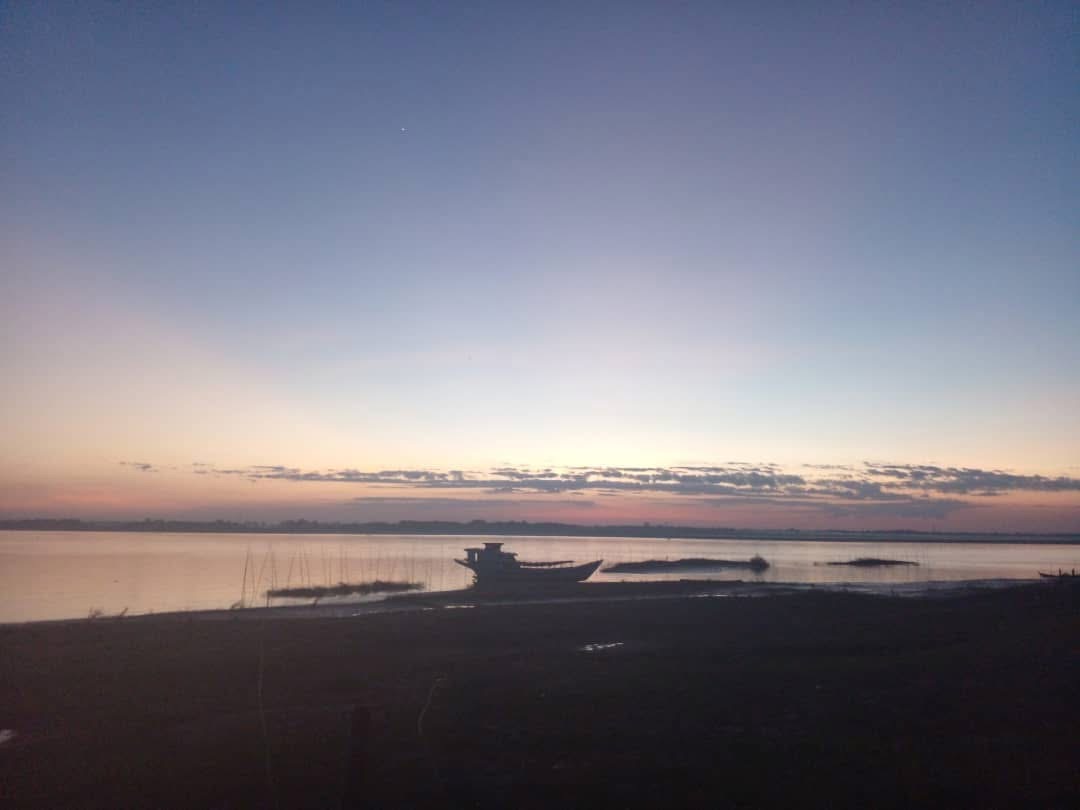
Growing up in a peasant family within the alluvial agrarian communities of the Irrawaddy Delta, my memories and political sensibilities are inseparable from the Irrawaddy River. The river is more than a living body of water that sustains multispecies life through fertile (Scott, 2025), nutrient-rich soils essential to local livelihoods. It also functions as an agent of destruction to suffering and loss caused by climatic disasters and ecological ruptures driven by political-economic exploitation (Patel & Moore, 2017). Life along the river is therefore defined by coexistence with both its generosity and its instabilities.
The riverine community practices two forms of agriculture: inland irrigated rice cultivation and seasonal alluvial farming. Historically, the riverine settlement of “Wadi village” (a pseudonym used for security reasons) has endured at least four major riverbank erosion events: in 1968, 1974, 1997, and a current episode that has been ongoing since 2024. Because erosion unfolds gradually, locals define disaster years by the catastrophic collapse of levees, emphasizing the slow, cumulative nature of environmental threat. For example, Daw Mya (76-year-old female farmer) marks the first time she was displaced by riverbank erosion through the milestone of her eldest son’s first birthday: “I had to move from my first village when my eldest son became a year old,” she recalls. Contrary to dominant eco-modernist narratives that prioritize flooding, villagers identify riverbank erosion and landslides as the most serious dangers. Seasonal flooding, by contrast, is understood as a natural and beneficial pulse that replenishes soil fertility.
Ko-Htu-Ko-Hta also conveys self-reliance rooted in collective obligation, emerging from the chronic absence of governmental support. Importantly, the “self” (Ko/ ကိုယ်တိုင်) does not signify individualism; rather, it encompasses collaboration with family members, kin, and trusted insiders. Literally, Ko-Htu-Ko-Hta translates to “helping yourself stand up” (Ko-ကိုယ်: self; Htu-ထူ: helping someone stand; Hta-ထ: standing up). Yet, its true meaning is rooted in solidarity and communal endurance. While Western self-reliance often suggests an independent choice, the “Ko-Htu-Ko-Hta” approach in Wadi village highlights the forced self-reliance required for community survival and resilience amid state neglect.
The phrase frequently arises in accounts of resettlement following riverbank erosion. Daw Mi (age 65, female farmer) explained: “When we had to relocate due to erosion, we just did it—Ko-Htu-Ko-Hta. We moved everything ourselves, with the help of neighbors and relatives, without help from outsiders.” Although neighbors assisted the most vulnerable households, the entire community lost property and bore the burden of displacement. U Pu, a 73-year-old small-scale farmer who has relocated three times, echoed this experience: “We’ve always had to move on our own. Just Ko-Htu-Ko-Hta. The state provided nothing.”
Though the origins of Ko-Htu-Ko-Hta are rooted in an unrecorded oral tradition, its meaning has historically been contested and politically co-opted. McCarthy (2019) observes that while the State has long misappropriated such terms to extract cheap labor and resources, a modern danger lies in the “NGO-ization” of these bonds. Neoliberal developmental aid agencies, by instrumentalizing voluntary mutual aid traditions, risk imposing hierarchical power structures upon ecosystem communities that originally relied on horizontal, reciprocal social relations—both within the community and in their relationship with Nature (Nixon, 2011). For Irrawaddy villagers, Ko-Htu-Ko-Hta is not a choice, but a mandatory survival strategy. Confronted by the dictatorship’s systemic neglect and refusal of responsibility, this communal “standing up” defines their disaster recovery.
As U Pu reflects, climatic and ecological ruptures have become visible and unavoidable for the Irrawaddy riverine community, who already struggle under the vulnerability imposed by political-economic authorities. Ultimately, Ko-Htu-Ko-Hta survival proves that when ruling powers prioritize capital accumulation over Nature and ordinary lives, horizontal reciprocity becomes the only reliable and accessible foundation within an increasingly precarious and eroding environment.
Reva is a researcher specializing in climate resilience, vernacular knowledge, political ecology, and multispecies justice. She is currently researching climate resilience and community adaptation in the Irrawaddy River’s Lower Basin. This article is based on research recently presented at the IMSRS 2025 Symposium.
References
Like This Article